Seven states filed a lawsuit this week challenging the federal government’s decision to pay nearly $1 billion to TotalEnergies to walk away from a major offshore wind lease off the coast of New York. Turn Forward has already weighed in on why that decision matters for the region’s energy future. But the impact of this loss of power to the grid will reach every household and business that pays an electric bill in the Northeast.
Winter is the new summer
For decades, the Northeast grid was built around summer. Hot days meant air conditioners running full blast, and that’s when power demand peaked. Grid planners sized their systems accordingly.
That’s all changing. As more homes switch to electric heat and electric vehicles become more common, winter electricity demand is growing at more than three times the rate of summer demand. ISO New England’s own 2025 forecast projects winter peak demand will grow at 3.1% annually through 2034, compared to 0.9% for summer peaks. New York faces the same pressure, with winter demand projected to approach 50 GW by the late 2030s according to NYISO’s 2025 Gold Book.
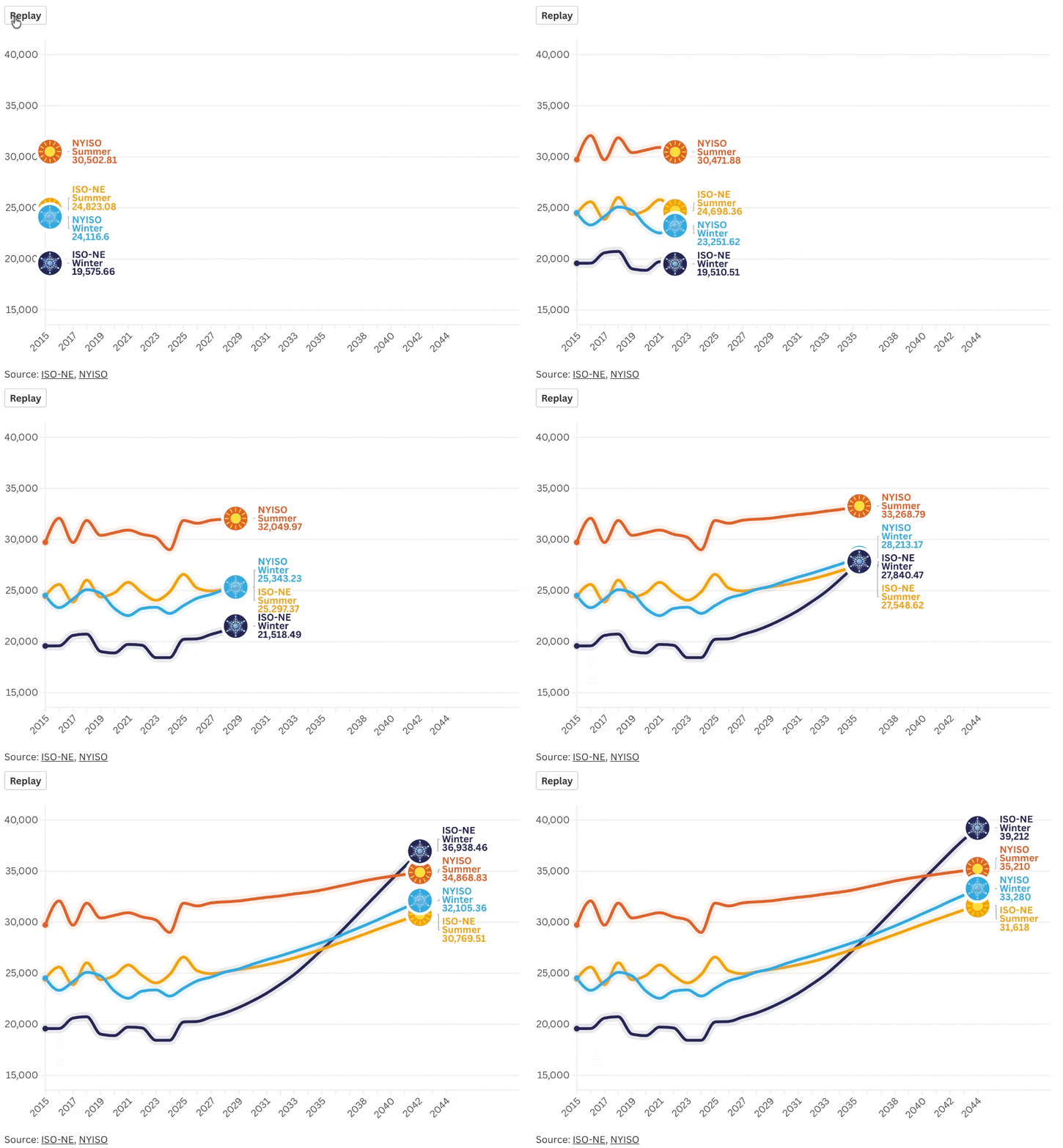
The grid that was built for August is increasingly being tested in January. Cold snaps can last longer than heat waves, natural gas pipelines that feed power plants are already under strain from home heating demand during those periods, and the window for bringing new capacity online is narrow.
What we lost with the NY Bight lease
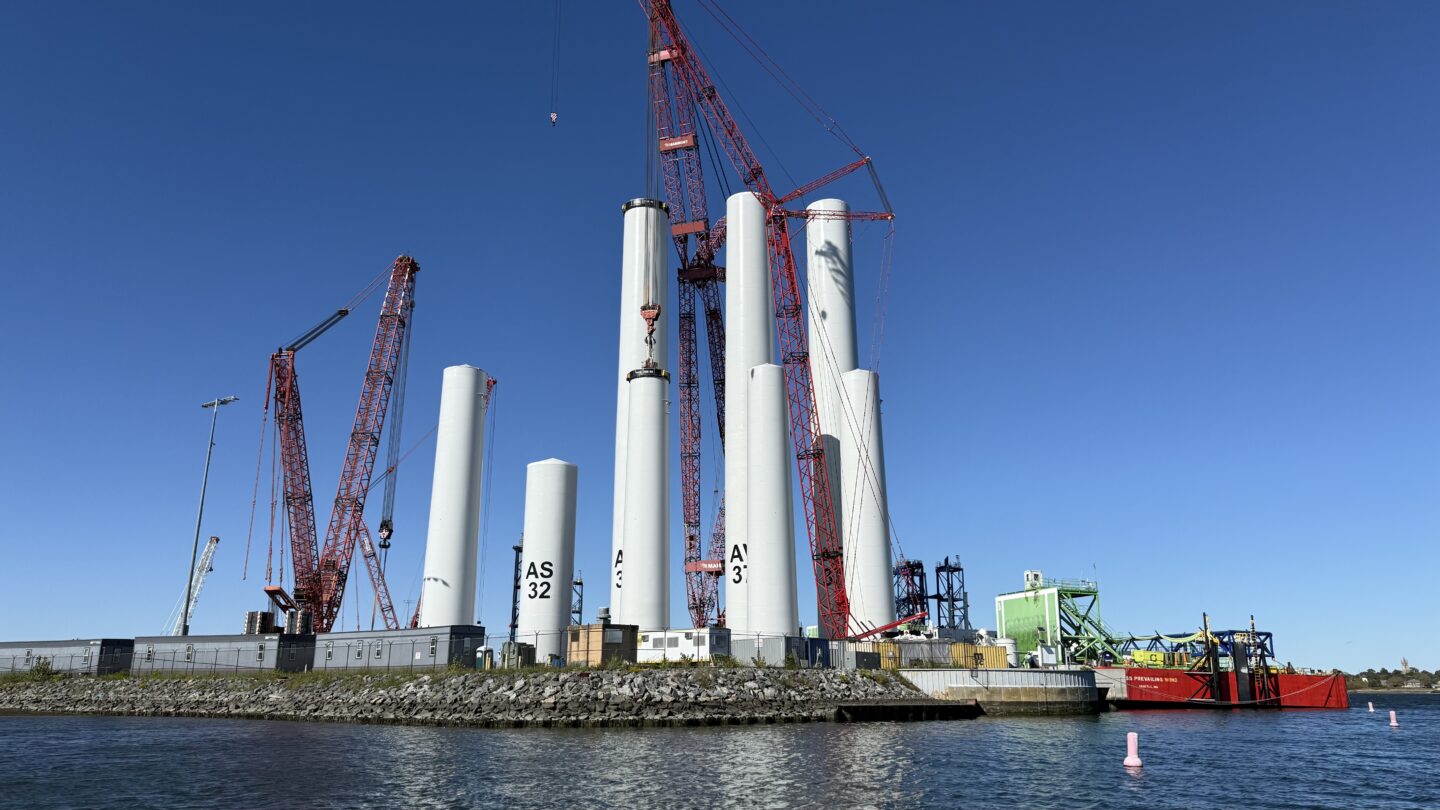
The lease at the center of this week’s legal action was already factored into the Northeast grid’s supply planning. Lease OCS-A 0538 covers 84,332 acres roughly 47 miles off the New York coast. TotalEnergies subsidiary Attentive Energy purchased it in February 2022 in what was, at the time, the highest-grossing competitive offshore energy lease sale in U.S. history. Construction permitting was already underway when the cancellation was announced in March.
With offtake agreement negotiations underway, grid operators had built this capacity into their plans for keeping the NY metropolitan area’s lights on. When the lease was canceled, there was no back-up plan. Those megawatts simply disappeared right when the region can least afford a gap.
Offshore wind provides a practical answer to the Northeast’s grid challenge: it generates power right next to the places that need it most, bypassing the bottlenecks that make moving power from rural areas into places like New York City and Boston slow and expensive. And it generates power during winter mornings and evenings — when demand is highest — in a way that solar can’t match.
What the experts say
A December 2025 analysis by Charles River Associates, an independent economics consulting firm, modeled what the Northeast grid looks like across four scenarios: one where offshore wind comes online as planned, one where it’s canceled with nothing replacing it, one where it’s replaced by inland wind and solar, and one where it’s replaced by natural gas. The research was commissioned in part by Turn Forward.
One of the clearest findings is on electricity cost — what households and businesses actually pay over time. The chart below compares projected electricity costs across all four scenarios for both New York and New England.
In New York, having offshore wind in the resource mix produces the lowest electricity costs of any scenario — $67B compared to $72B when nothing replaces it or when gas alone fills the gap. The analysis also found that downstate New York — New York City and Long Island — faces the most serious near-term reliability risk. Those areas have limited power lines connecting them to the rest of the grid, so they can’t easily import electricity from elsewhere when demand spikes. Offshore wind connects directly into those areas, solving that problem in a way that resources located further inland can’t.
In New England, replacing offshore wind with inland renewables produces slightly lower electricity costs on this measure, but the same analysis found that approach significantly weakens grid reliability — especially in dense coastal cities like Boston that can’t easily import power from further away. When reliability is weighed alongside cost, offshore wind is the strongest performer in both markets.
The worst outcome across every measure is doing nothing — canceling offshore wind and adding no replacement at all. That scenario means higher electricity bills, a less reliable grid, and greater strain on aging infrastructure.
The grid math doesn’t wait
Electricity demand in the Northeast isn’t slowing down. Data centers, manufacturing, electrification of homes and transportation all add load to a grid that is already stretched. The question facing planners and policymakers isn’t whether new capacity is needed. It’s whether enough can be brought online in time.
The lost NY Bight lease was part of the answer to that question. Seven states have now made that argument in federal court. The reality of the grid backs them up.
Full research: Impacts of Offshore Wind on Reliability and Affordability in ISO-NE and NYISO — Charles River Associates, December 2025
Turn Forward’s statement: Turn Forward Statement on the NY Bight Lease Buyback