The federal government has now spent more than $2.5 billion taxpayer dollars buying out eight offshore wind leases — including multiple projects in and around the New York Bight, the stretch of ocean off New York and New Jersey that holds some of the most valuable wind resources on the Eastern Seaboard. The buyouts have removed gigawatts of planned capacity from a region where grid operators were already warning about near-term reliability risk. Independent modeling from Charles River Associates (CRA) shows what that gap is likely to cost — in terms of reliability and dollars.
Context
New York Was Counting on This Power
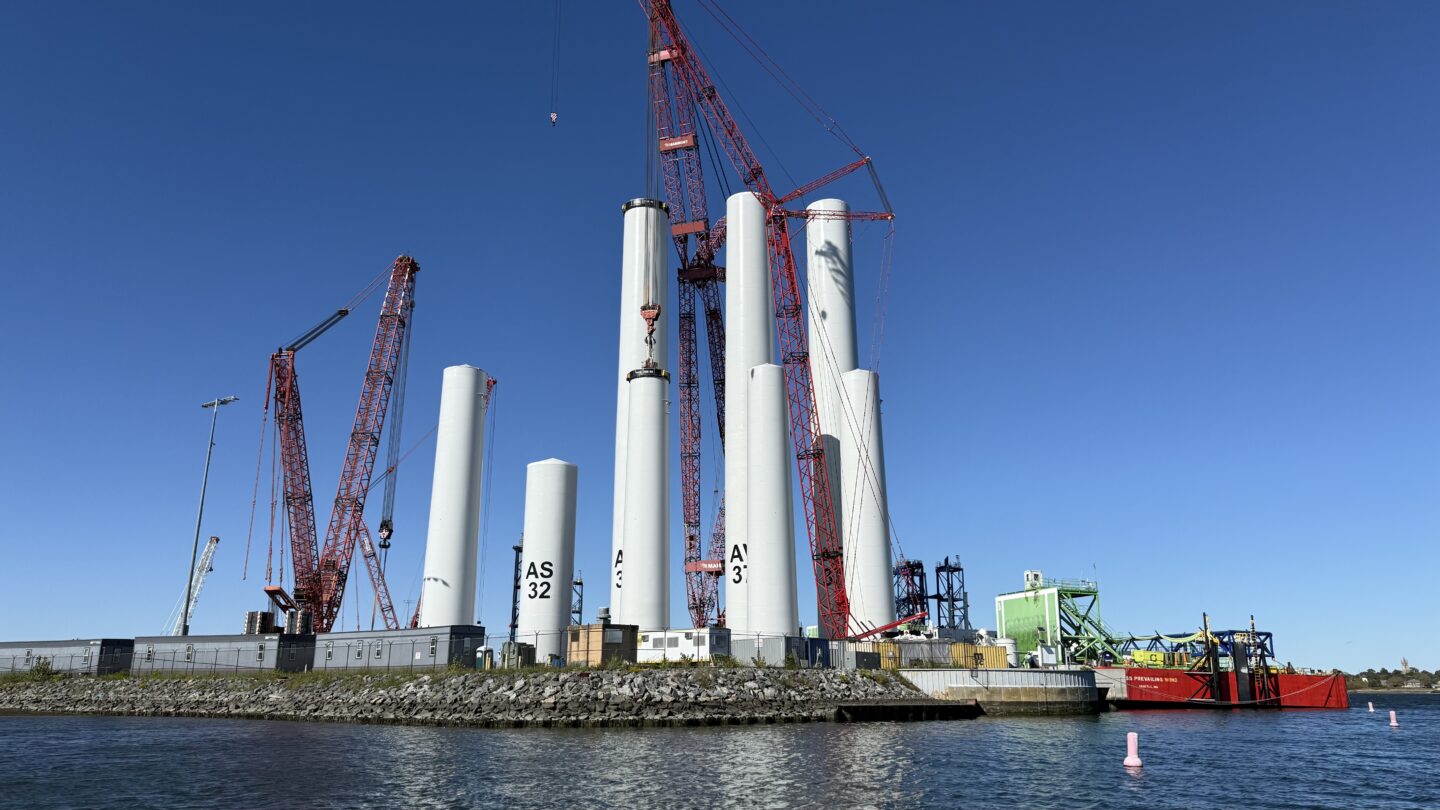
New York had set a target of 9 gigawatts of offshore wind by 2035 — power that state grid planners had already built into their plans to keep the lights on. The TotalEnergies settlement eliminated the 3-gigawatt Attentive Energy project off New York — a “deal” now challenged in court by seven state attorneys general. The Invenergy buyout removed a further 2.4 gigawatts of planned New York Bight capacity in canceling Leading Light Wind. April’s Ocean Winds agreement took out another 2.4 gigawatts of offshore wind capacity out of the running — roughly equivalent to two large nuclear power facilities in itself.
The scale of these cancelled projects matters. The New York Independent System Operator (NYISO) projects that winter peak electricity demand will approach 50 gigawatts by the late 2030s. More than 1,600 megawatts of older generating units have retired since 2019, tightening supply, particularly in the downstate zones that serve New York City and Long Island. Those zones face some of the most constrained transmission conditions in the country — meaning power generated upstate or in neighboring regions can’t simply flow in to fill the gap.
Power generated in the New York Bight connects directly to where demand is highest. That’s the geographic logic these buyouts disrupt. The question the modeling answers is: how much does that disruption cost?
The Research
What the Modeling Says About Exactly this Situation
A December 2025 white paper by Charles River Associates, an independent economic consulting firm, modeled four possible futures for New York’s grid between now and 2044. The Base Case reflects planning assumptions prior to the recent lease buyouts. Three counterfactual scenarios test what happens when offshore wind is removed: one where nothing replaces it in time, one where it’s replaced by inland renewables and storage, and one where it’s replaced by new natural gas peaking capacity in the same downstate zones where offshore wind would have connected.
Those three counterfactuals are no longer hypothetical. The buyouts have set the region on a path the modeling already examined — and the results were not the optimal outcomes.
Reliability
In CRA’s worst-case scenario, offshore wind is canceled and nothing takes its place in time. According to the model, grid reliability risk was 43% worse than the Base Case by 2032 and 76% worse by 2036. New York City faces the sharpest exposure: the transmission constraints that already limit power imports into the five boroughs make in-zone generation irreplaceable. So far, the worst-case scenario appears to be taking shape.
Even the improved scenario in which offshore wind is replaced with new natural gas doesn’t close the gap. By 2036, the gas-only replacement carries more than four times the reliability risk of the Base Case in which offshore wind is developed. The paper identifies why: constrained natural gas pipeline infrastructure, complex permitting, and limited access to firm fuel contracts in urban load pockets make near-term gas construction in downstate New York a difficult substitute.
Affordability
The reliability risk is only part of the picture. Offshore wind suppresses wholesale energy prices by displacing higher-cost generation during peak hours.
Animation: Union of Concerned Scientists, The Offshore Wind Effect. View full animation.
The CRA modeling quantifies what happens when it isn’t there. Across the full 2026–2044 projection period, CRA projects the net present value of wholesale energy costs in the Base Case with offshore wind at $67 billion — compared to $72 billion in scenarios where either gas or no replacement fills the gap. These are modeled system-wide energy price totals across the full projection period, not household electricity bills. Removing offshore wind from the system raises the wholesale cost of electricity, which ultimately affects everyone on the grid.
Worth noting
The scenario with the lowest capital costs on paper is the one where offshore wind is simply canceled with no replacement. But CRA flags explicitly that this option doesn’t meet NYISO’s resource adequacy requirements — and that the resulting capacity shortfalls would drive up market costs as the grid scrambles to fill the gap.
NYISO Modeled Energy Price by Scenario (NPV, 2026–2044)
Source: Charles River Associates, Impacts of Offshore Wind on Reliability and Affordability in ISO-NE and NYISO, December 2025, Table 4-3, p. 47.
Bottom Line
The Supply Gap Is Real — and Comes at a Cost
Eight lease buyouts. More than $2.5 billion in federal payments. Gigawatts of planned capacity removed from the region with the most constrained grid and the fastest-growing winter demand on the East Coast. Oh, and which happens to be the country’s most populous metropolitan area.
The modeling was built to evaluate hypothetical futures. Thanks to these buyouts, that future is now on the horizon.
Every scenario CRA examined that lacks offshore wind in New York’s downstate zones produces higher reliability risk and higher energy costs than developing offshore wind — and no near-term substitute has been identified that changes that outcome.
“These buyouts are not one-for-one ‘swaps’ for another kind of energy. When you eliminate future utility-scale power sources from a crowded, energy-hungry population center, you need a clear Plan B to avoid future grid stress. Replacing coastal offshore wind with geothermal or natural gas infrastructure in another region does nothing to address rising ratepayer affordability concerns, reliability challenges or potential gaps in power supply in the Northeast and mid-Atlantic.”
Hillary Bright, Executive Director, Turn Forward
This research was conducted by Charles River Associates.
Read More
Go deeper on the research behind this post.
The full Charles River Associates white paper models grid reliability and energy price outcomes across four technology scenarios for both NYISO and ISO-NE through 2044.