
FIRST PERSON
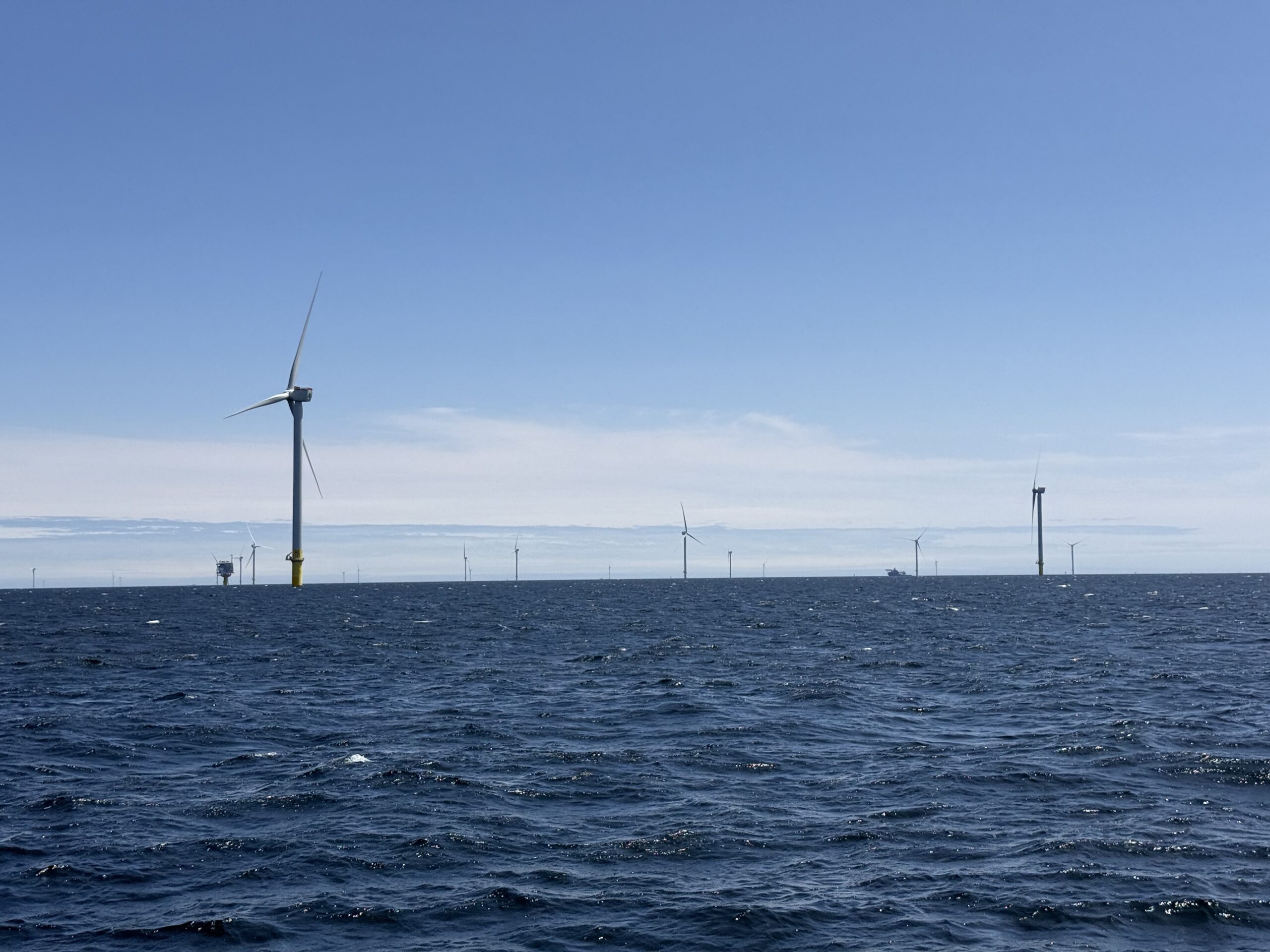
The National Wildlife Federation sponsored a boat in the 2026 Block Island Inshore Fishing Tournament, giving a group of anglers the chance to fish in and around the area’s offshore wind turbines. Two charter trips went out of Point Judith, RI, one each day, July 25 and 26.
I’m Erin McLean, communications director at Turn Forward. People who study marine habitats have known for a while that structures like turbine foundations act as artificial reefs, drawing in marine life the same way a shipwreck or a jetty does. This July, the National Wildlife Federation got some of the more influential people in the recreational fishing community on a boat and took them out to see this dynamic firsthand.
The guest list included club presidents, charter captains, a few state fisheries board members, a couple of marine researchers. Some of them already fish around these turbines regularly since the fishing tends to be good. Others had never been out to see them at all, or heard much about what’s been attracting anglers. Either way, the point was to let them see offshore wind energy generation and the artificial reef effect up close instead of taking anyone’s word for it.
I went along too. I don’t know the first thing about fishing, but I know energy and ecosystems: I have a master’s in marine biology from URI, and I was there to help explain both the wind energy side of these projects and the ecology playing out around them.
THE TRIP
Three offshore wind projects, two very different boat rides
We left the dock at 7 a.m. Saturday, headed for South Fork Wind and Revolution Wind, two federal lease areas well offshore. South Fork sits about 35 miles off Montauk Point and 19 miles southeast of Block Island; Revolution Wind is roughly 15 miles south of Point Judith. Getting out there took close to three hours each way.
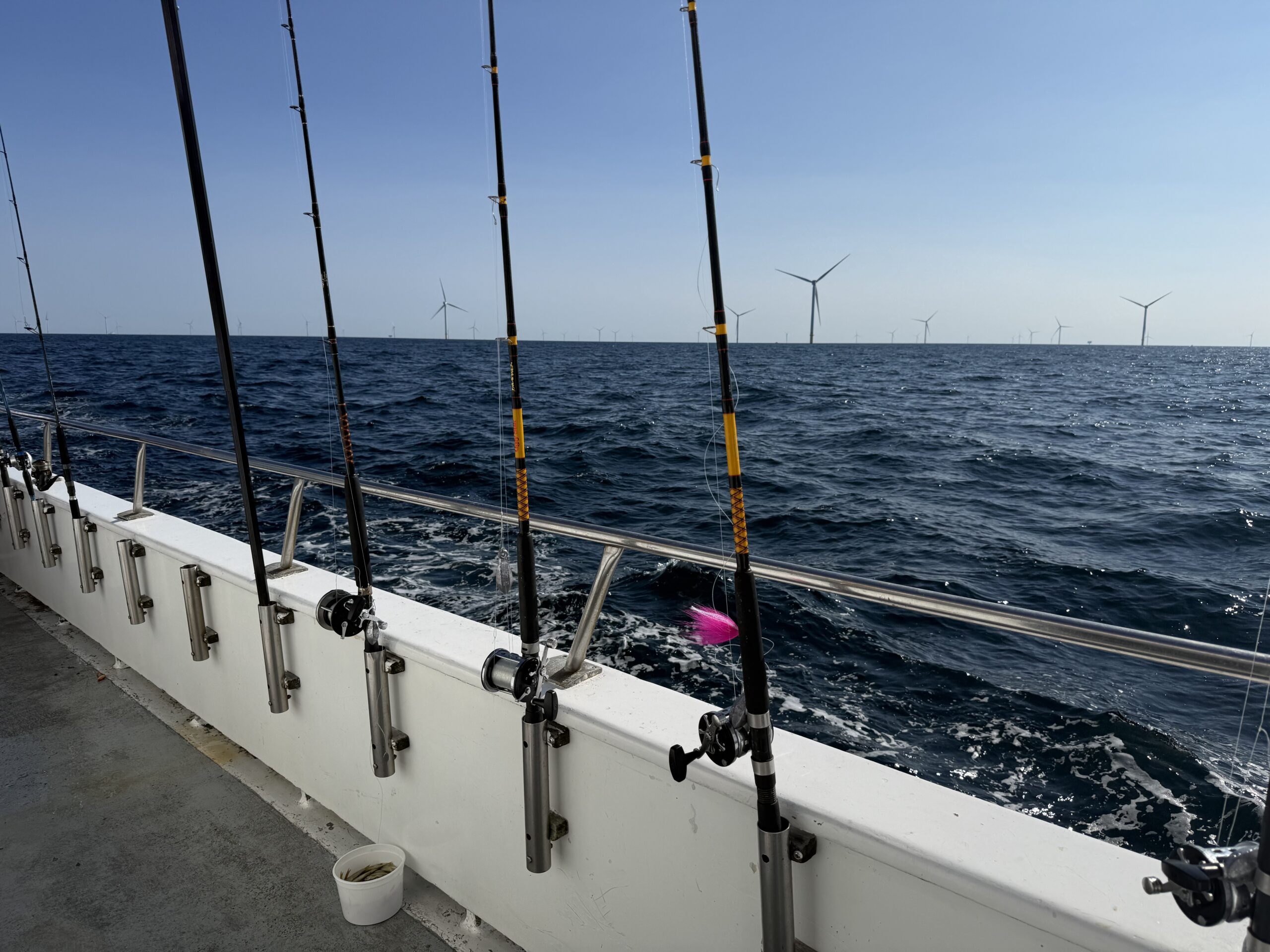
Rods in the water at Revolution Wind, Saturday morning.
On the way out, we stopped the boat to watch a pod of humpback whales bubble feeding off the bow before continuing on toward the turbines. It set the tone early. This stretch of ocean was already full of life, turbines or not, and the question on everyone’s mind was what happens to that life once you drop a few hundred steel foundations into the middle of it.
We were out again just as early Sunday, headed to Block Island Wind Farm instead, and that ride was much shorter. Block Island was the first offshore wind project built in the U.S., running since December 2016, and it sits in Rhode Island’s own state waters, just under four miles off Block Island itself.
UP CLOSE
You don’t see this from shore
Turbines get sited well out to sea for a few reasons: steadier wind further from the coast, room to stay clear of shipping lanes, distance from other activity closer to shore. Because of that, most people don’t get this close to turbines unless they’re part of the new workforce responsible for their routine maintenance, or already spending real time on the water as fishermen. From the coast, on a clear day, the South Fork and Revolution turbines are a faint shape on the horizon, if you can see them at all. Standing next to the base of one is a different experience entirely, and most of the people on our boat hadn’t done it before.
Another boat pulled right up to a turbine, close enough to touch it. There’s no fence around the base, no buoy line, nothing keeping anglers out. You fish it the way you’d fish a shipwreck, or one of the oil rigs in the Gulf: new hard-bottom structure that fish gather around, added to an area that already had some natural hard-bottom habitat before construction.
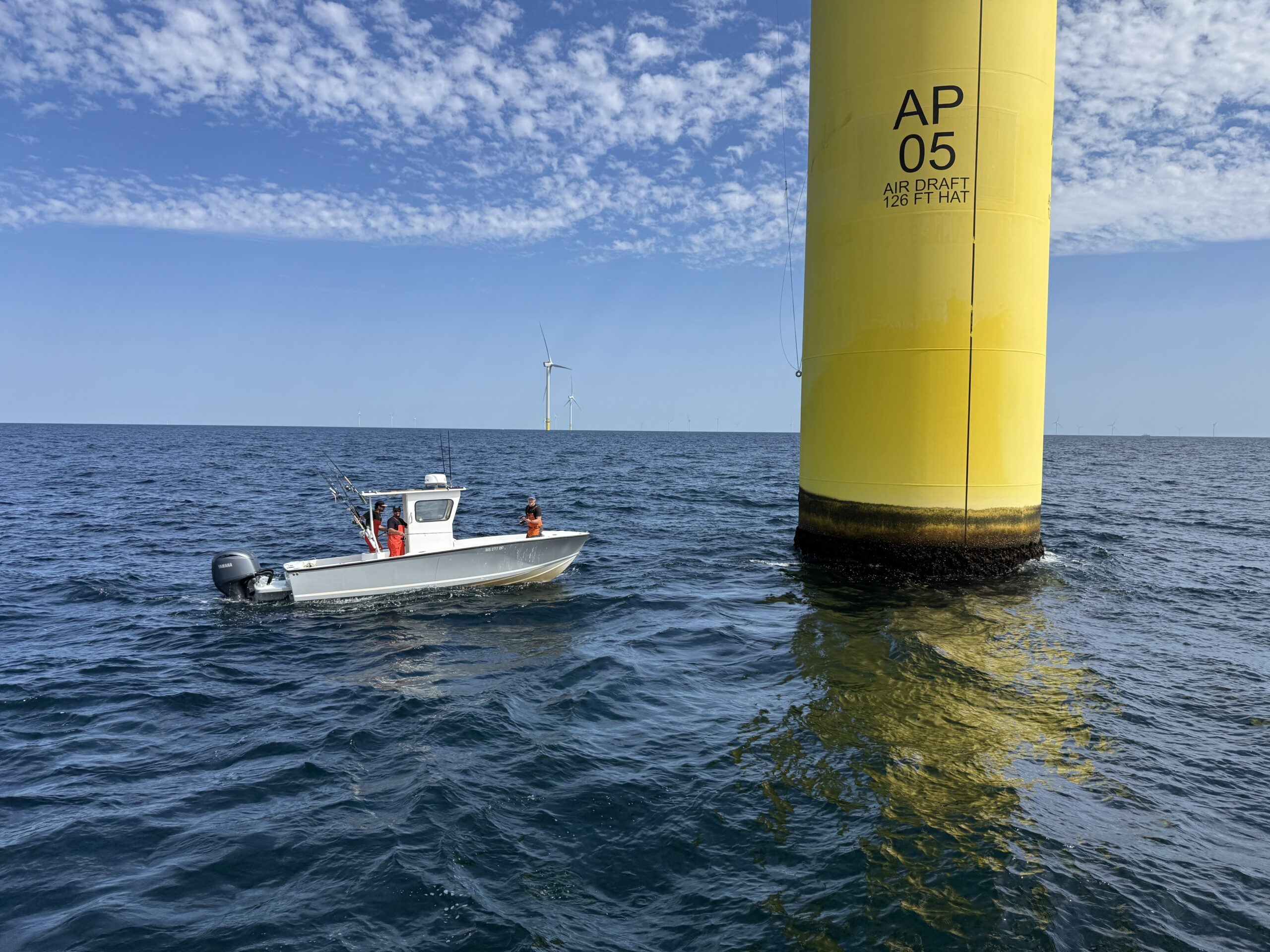
No fence, no buoy line. Anglers can fish right up to the base.
The mussels are where the reef effect starts. They colonize the turbine foundations by the thousands, drawing in crabs and small fish, which in turn draw the bigger fish people were catching all weekend. Charlie Nutting, a diver who documents marine life at offshore wind sites (@charlielikeswater), posted underwater footage earlier this year from Vineyard Wind, a much larger project south of Martha’s Vineyard, showing mahi mahi, tautog, triggerfish, and juveniles of several species living around the turbine foundations there, mussels included:
Research backs it up. A seven-year, peer-reviewed study at Block Island Wind Farm, published in the ICES Journal of Marine Science, tracked catch rates before and after the turbines went in, finding that black sea bass and Atlantic cod both increased at the site once construction wrapped. Fluke and black sea bass were most of what we caught too, almost all of it within casting distance of a turbine base.
We also got close enough to one of the offshore substations to see the whole structure from water level. Most of the group had never seen one of those before either.
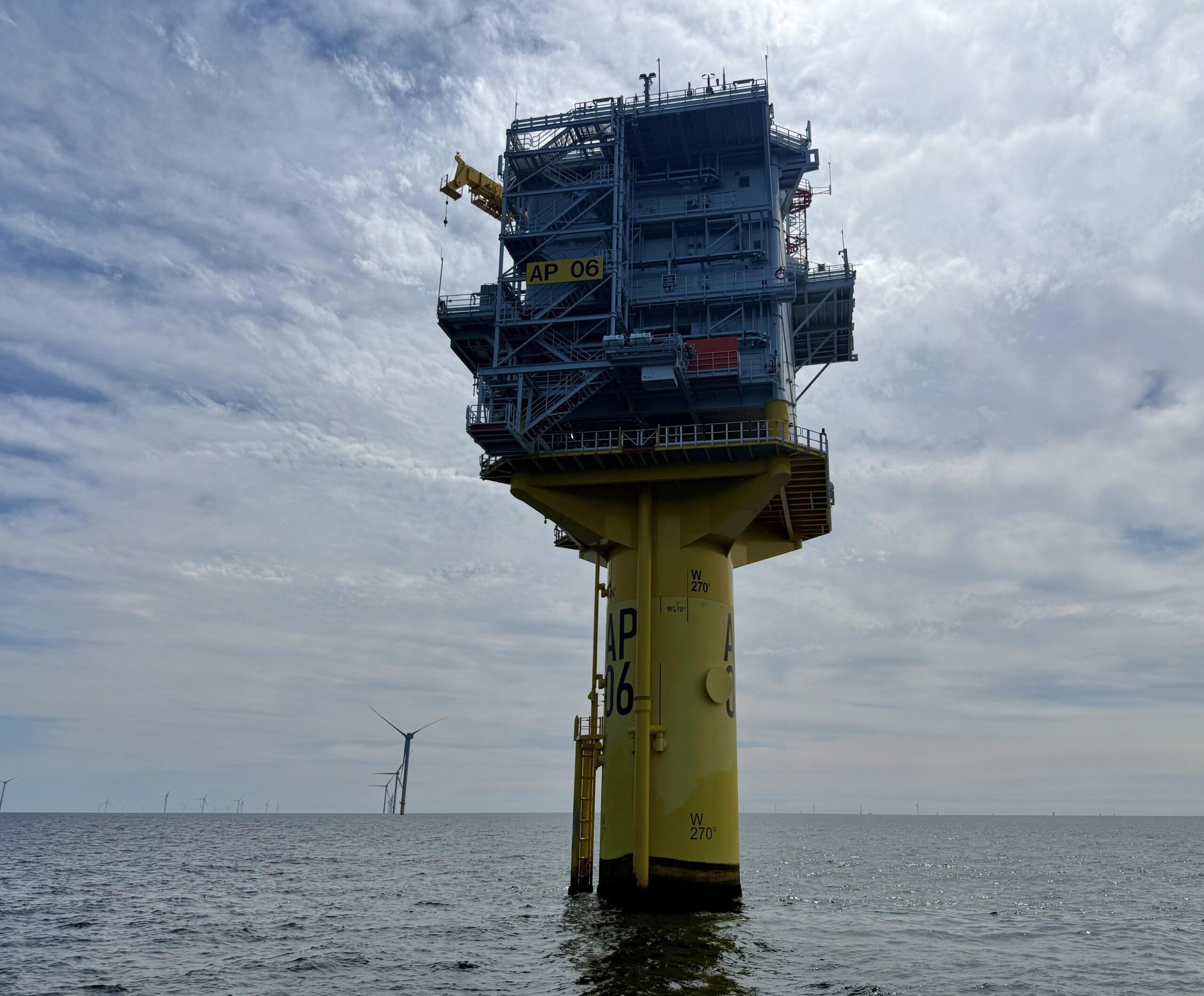
The substation, seen from water level.
ON DECK
Conversations between fish bites
As I discovered, fishing is mostly waiting for a bite, and that’s when people talk. Most of what I heard came out between casts, everyone with a line in the water and nothing else to do but chat. One angler said seeing the turbines up close changed how they thought about the scale of the engineering involved, from how big and mechanically complicated everything looked in person. Another attendee had come on a similar trip the previous year and made the trip again this year; they mentioned writing about that first outing for their fishing club’s newsletter afterward, wanting the rest of the club to hear what they’d seen, tradeoffs included. A charter captain said they’d bring some of it back to other captains they know.
A couple of people raised real concerns about seafloor disruption during construction and how long that habitat takes to recover. There’s a benthic monitoring program tracking exactly that at South Fork Wind, and the early results point to good recovery. One wanted more long-term research on marine life impacts before drawing firm conclusions, and that’s fair. There’s already a fair amount underway, though: the benthic monitoring, required fisheries monitoring programs, and plenty of third-party and academic research besides.
We wanted people to walk away with a better opinion of offshore wind, maybe even willing to speak up for it back in their own communities. Not everyone left fully sold on it, and that’s fine. As anyone who’s introduced something new to a skeptical crowd knows well, acceptance is often a long-term game. Part demonstrating value and part overcoming stereotypes and misinformation, you’ve got to be in it for the long haul.
WHY I WENT
A better argument than any of the slides I’ve written
I spend most of my job explaining offshore wind to people who’ll probably never see a turbine in person, let alone the mussels growing on the base of one. This time my marine biology degree finally got some real use. I stood next to people who’ve fished this water for decades and watched the turbines stop being an idea and become something they could see, touch, and fish around.
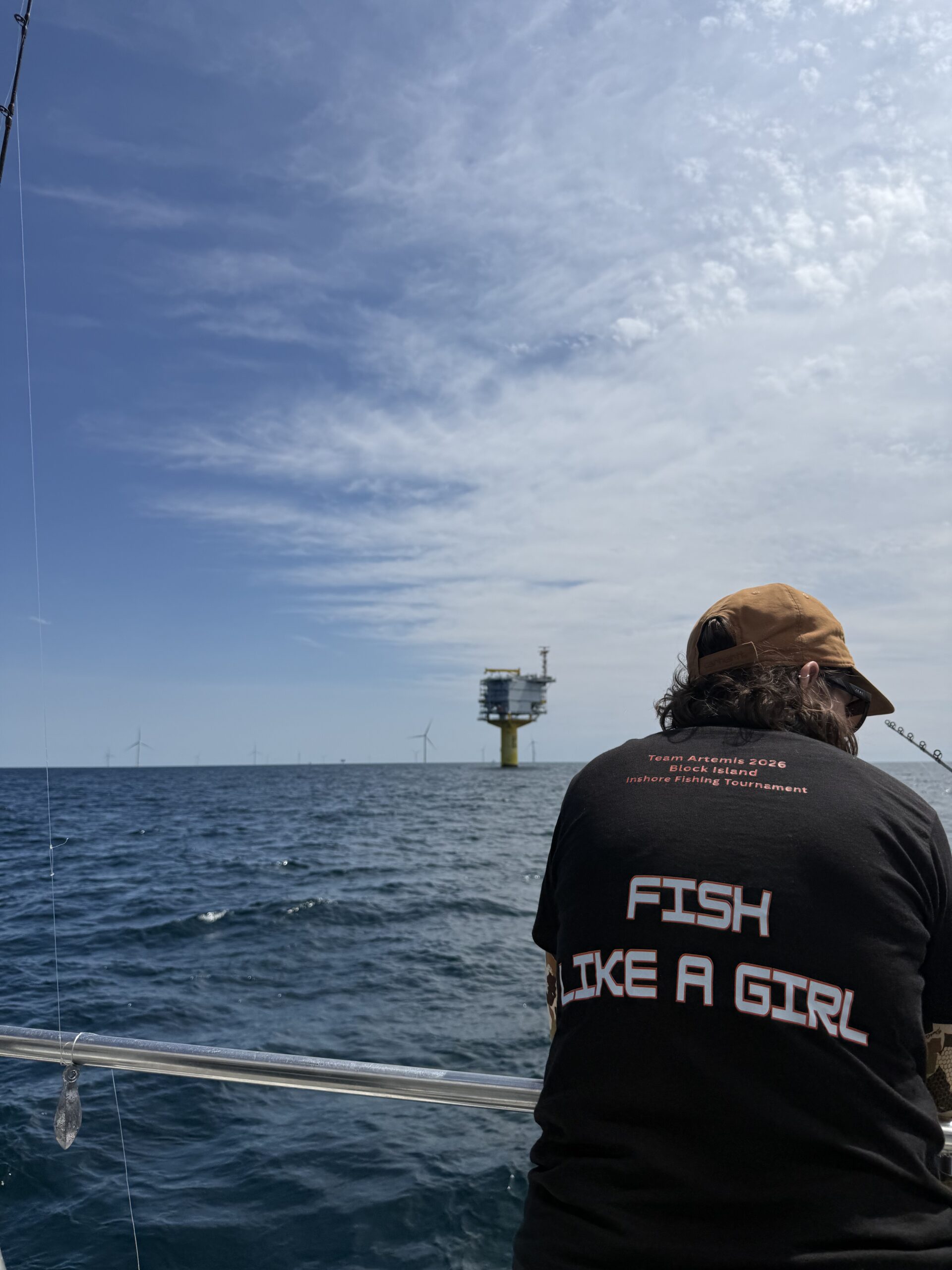
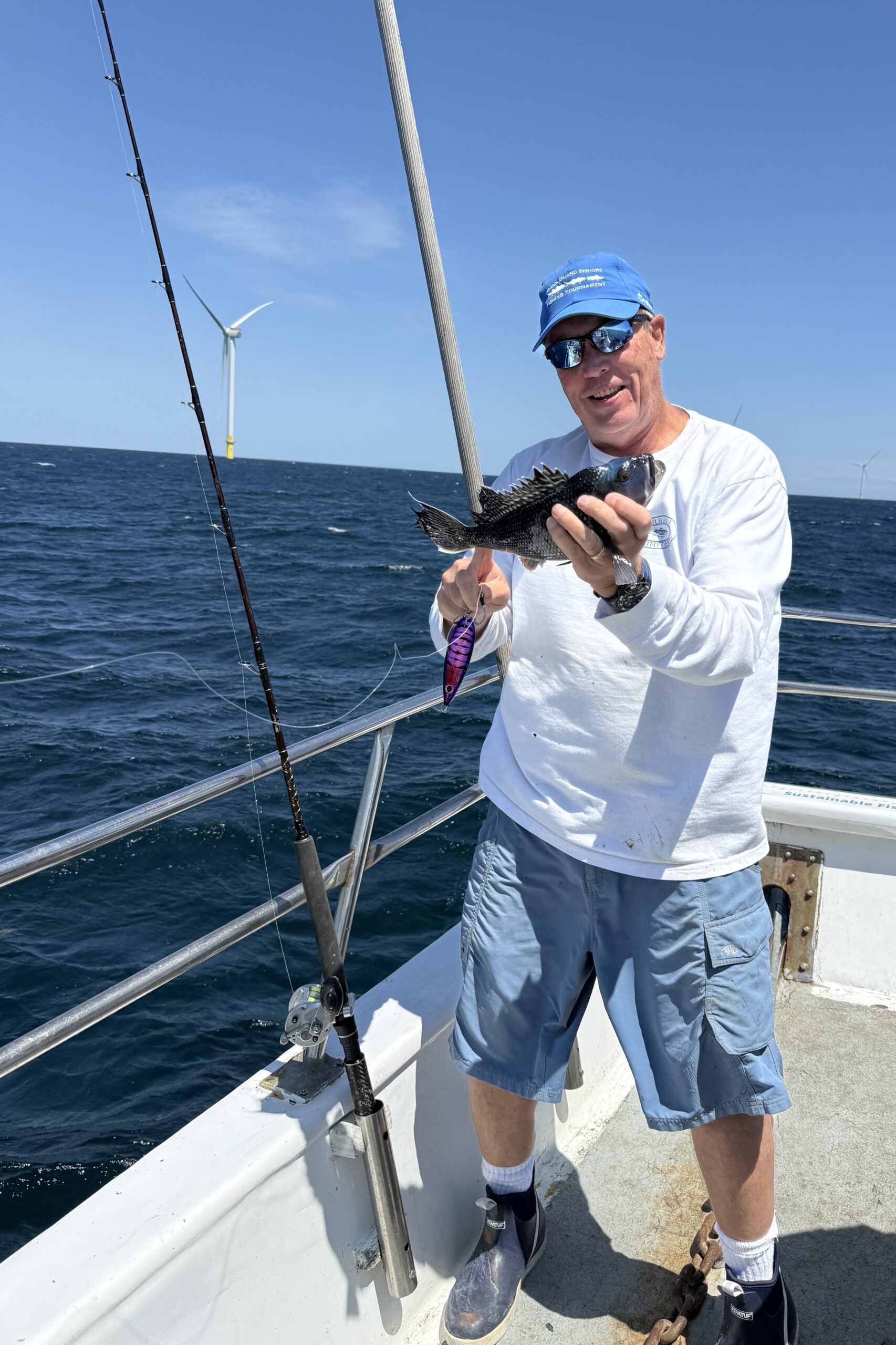
Left: a member of the Artemis group, a project dedicated to getting more women interested in hunting and fishing, fishes near the substation. Right: an angler holds up his catch, a black sea bass.
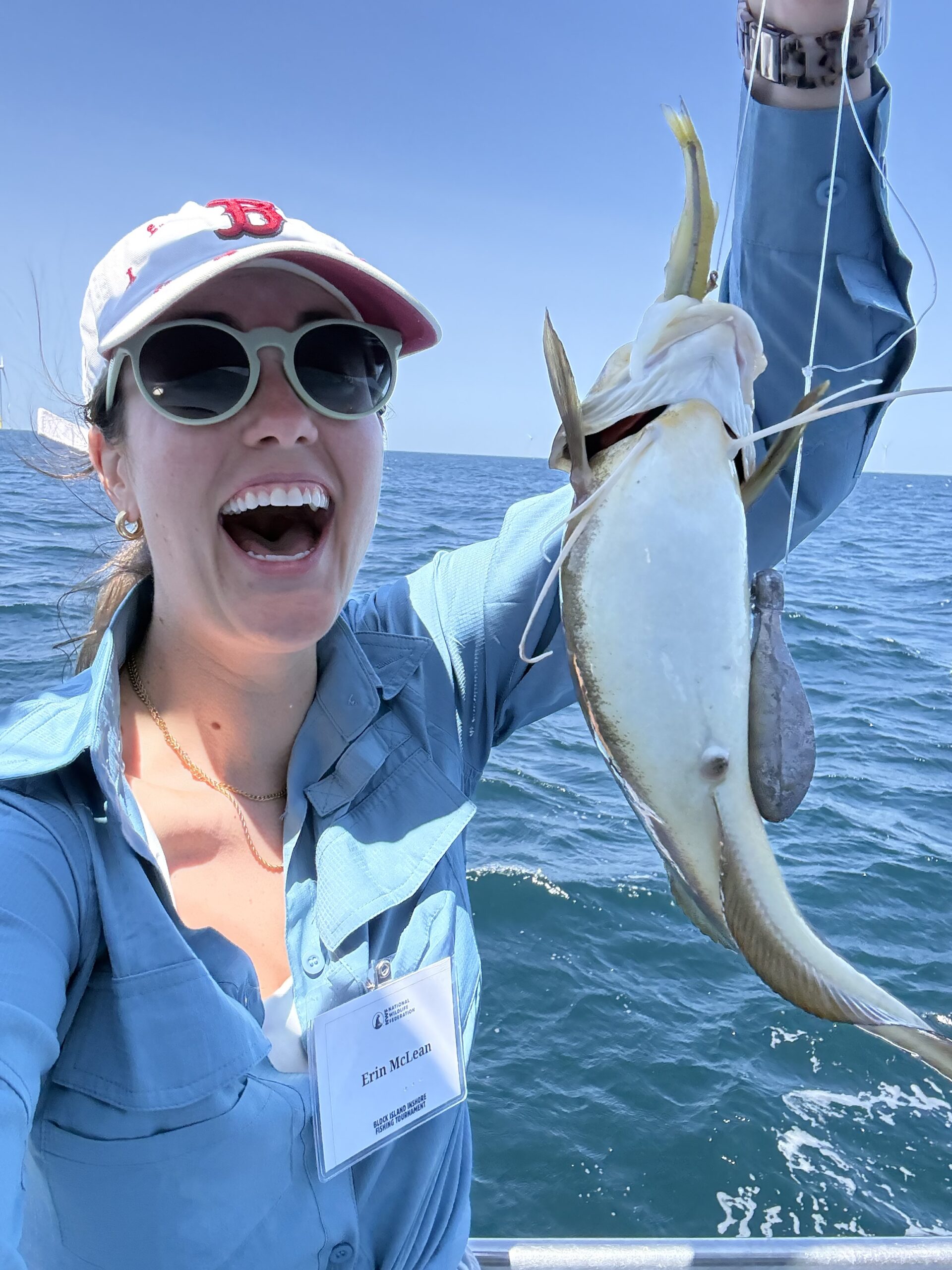
Me, mid-tournament, with a fish that is definitely too small and not even a part of the tournament but for this amateur angler, I’m still a little proud of it.
None of our anglers placed in the tournament, and I don’t think anyone minded. Two boatloads of people who spend their lives on the water went home having stood at the base of a turbine, watched fish gather around a structure that wasn’t there ten years ago, and come away with a clearer picture of what’s happening beneath the surface. That’s the catch this trip was really after.
See the tournament that brought us out there
2026 Block Island Inshore Fishing Tournament