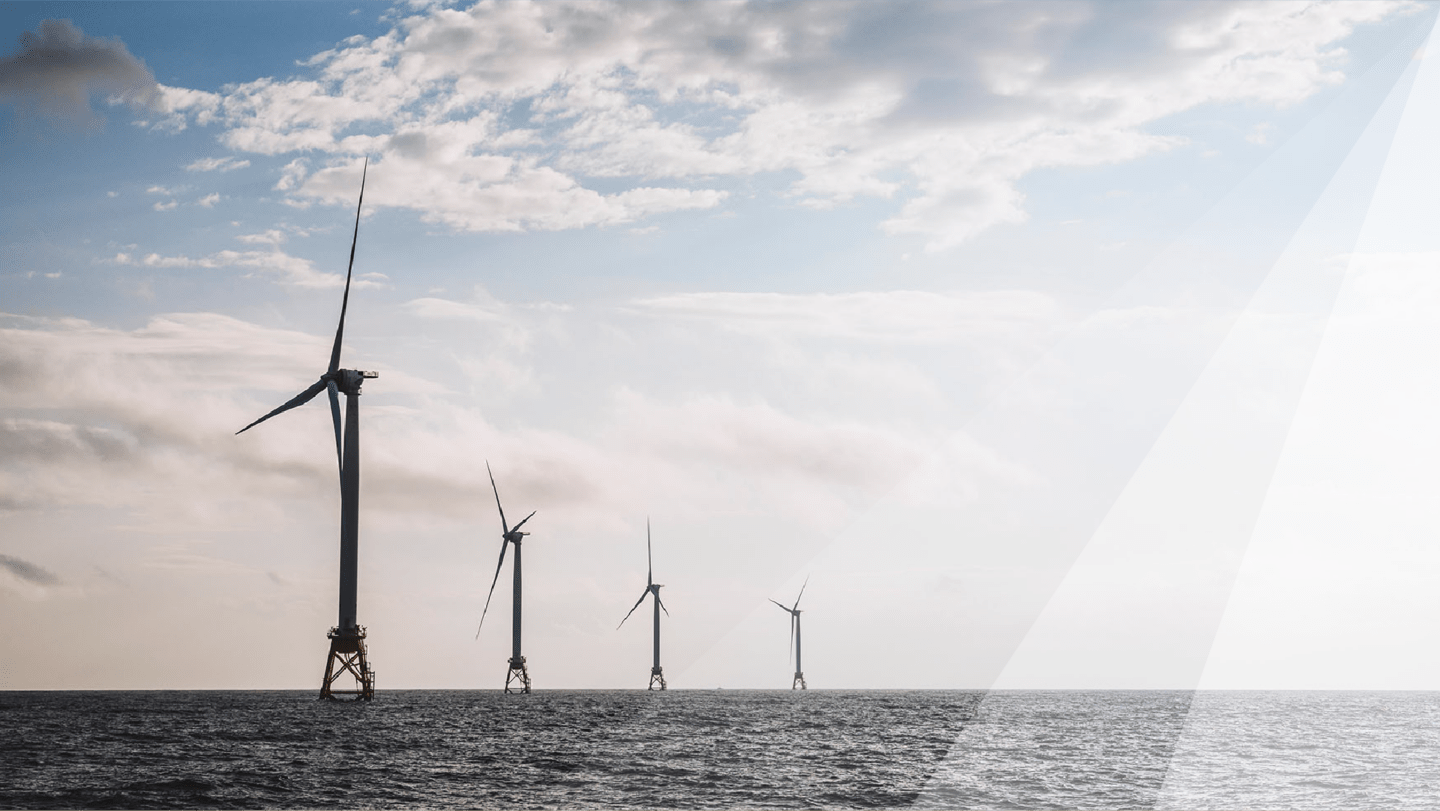
Turn Forward hosted a webinar on August 5 titled Grid Under Pressure, bringing together two people who’ve spent much of their careers focused on power grids and reliability in the US and abroad: Audrey Zibelman, former CEO of the Australian Energy Market Operator and past chair of the New York Public Service Commission, and Seth Kaplan, Vice President at Grid Strategies. They joined Turn Forward’s Executive Director Hillary Bright to talk about offshore wind, grid reliability, and what happens when planned resources are taken off the table.
Section 1: Context
When the grid gets stressed, offshore wind shows up
The conversation opened with a simple question: how does offshore wind perform when the grid is under strain? The data shows it reduces grid stress during peak times, serving as an excellent complement to mainstay sources like natural gas. Take South Fork Wind, America’s first utility-scale offshore project, which entered service off Long Island in 2024. During this July’s heat wave, South Fork ran at an average capacity factor near 75% over the Independence Day weekend, including a 90% output day on July 2, the same day NYISO issued an energy watch due to shrinking operating margins.
It’s not just a summer story, either. Kaplan and Zibelman also pointed to winter data from ISO New England, which found that offshore wind reduces reliance on natural gas during the coldest stretches of the year, when gas supply gets tight and prices spike.
In other words, offshore wind performs well precisely when other resources are struggling.
Section 2: The Gap
15,074 megawatts, and counting
Kaplan walked through a new analysis showing that between February and December 2025, 15,074 megawatts of offshore wind capacity in the PJM and ISO-NE regions withdrew from the interconnection queue, a waitlist of projects seeking connection to the grid. Comprising 16 separate projects, those megawatts would have provided enough capacity to power roughly 10 million U.S. homes.
15,074 MW
withdrawn across 16 projects
9,750 MW
ISO-NE (65%)
5,324 MW
PJM (35%)
~10M
homes’ worth of power
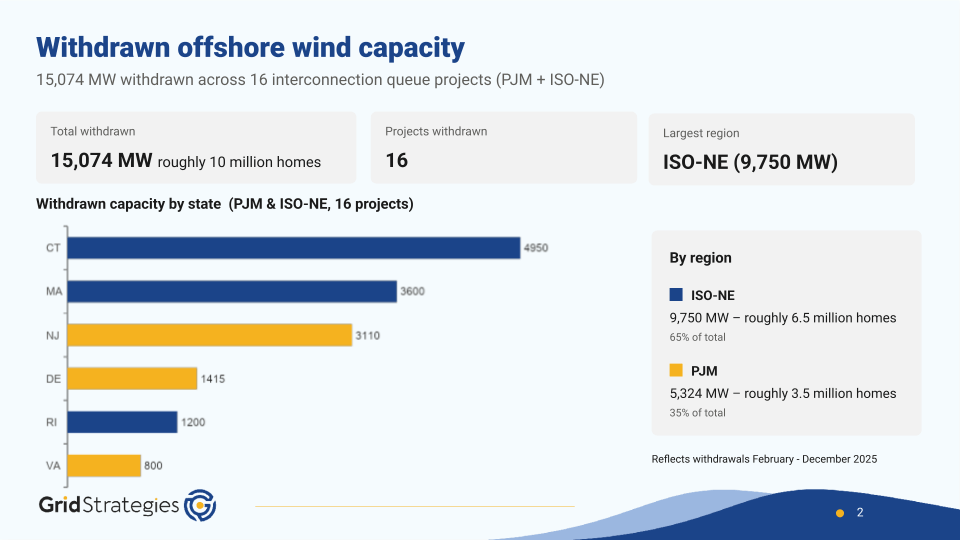
Source: Grid Strategies analysis of PJM and ISO-NE interconnection queue data, based on Berkeley Lab and Grid Tracker records, February–December 2025, months before the first offshore wind lease buyout was announced.
Kaplan emphasized that this represents a conservative estimate, as it excludes New York projects where the withdrawal dates couldn’t be confirmed with confidence.
He then tied that number back to what it means for grid planners:
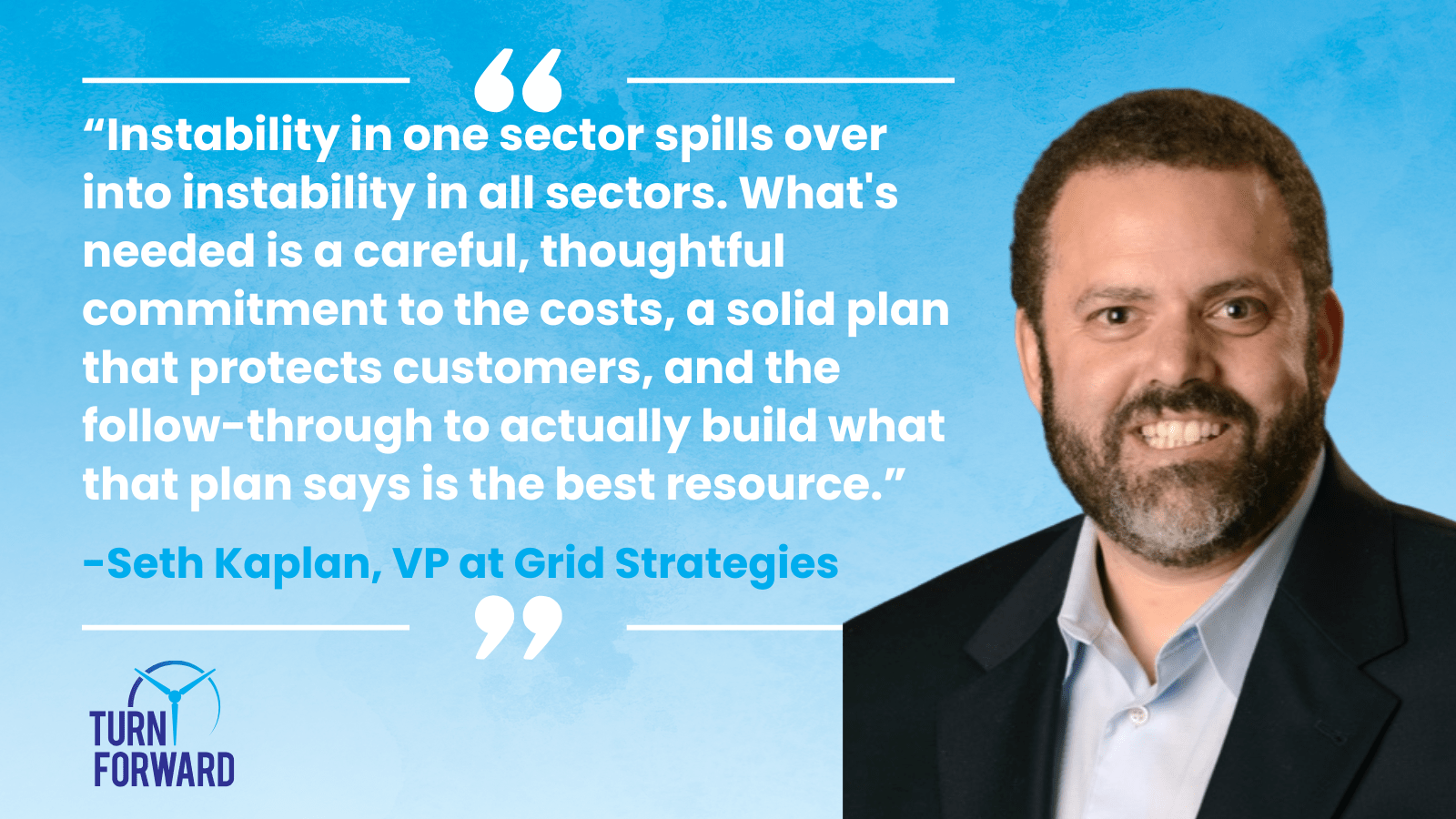
Seth Kaplan, Vice President, Grid Strategies
Section 3: The Research
What planning for the long term requires
Zibelman, drawing on her experience running Australia’s national grid, argued that the biggest risk to reliability isn’t complexity. It’s uncertainty. When a planned resource gets pulled from long-term projections, grid operators have to redesign that plan around a more expensive, less optimized alternative, forcing investors to price in a risk premium for future projects. Customers end up covering both costs. When asked what that uncertainty looks like from the operator’s chair, she didn’t hedge:
![Quote from Audrey Zibelman, former CEO of the Australian Energy Market Operator: Grid operators don't have a choice here. They have to understand what [losing a planned resource] means for the grid, because they need adequate supply, and going without enough power is never an option.](https://turnforward.org/wp-content/uploads/2026/08/audrey-quote.png)
Audrey Zibelman, former CEO, Australian Energy Market Operator
Zibelman’s prescription was transparency: publish the assumptions, show the math, and let policymakers ask questions based on fact instead of guessing. Kaplan also noted that developers need durable, stable permitting and long-term contracts to justify the capital these projects require. Bright picked up the same thread from the policy side:
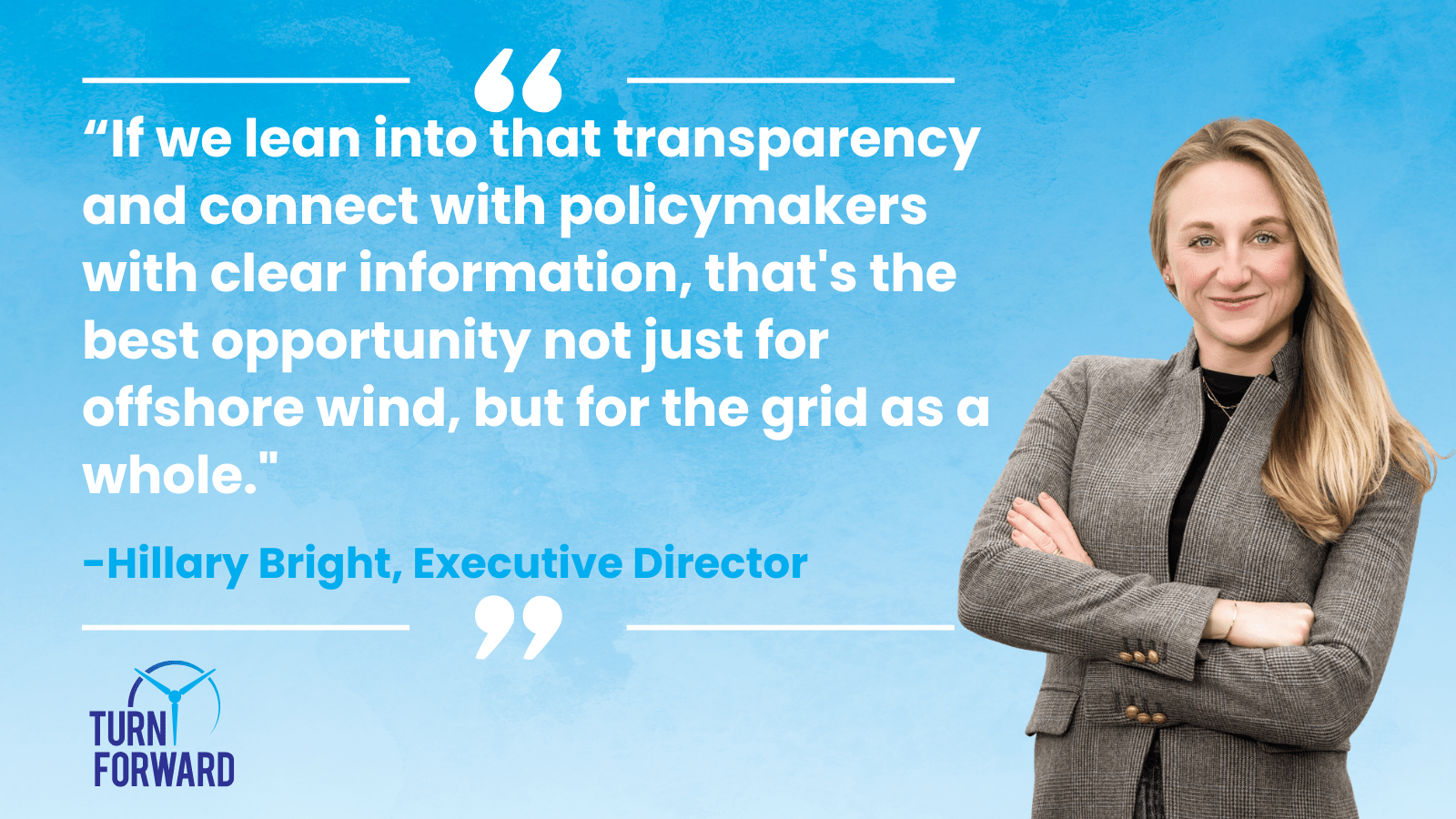
Hillary Bright, Executive Director, Turn Forward
Section 4: Bottom Line
A resource that works, at a moment we can’t afford to lose it
None of this is an argument for or against any one energy source. As Zibelman said, “The electrons aren’t painted red or blue.” Both speakers were clear that a diverse, complementary mix, including natural gas, is the lowest-cost way to keep the grid reliable. Offshore wind that’s already contributing power to the grid is proving itself under real stress. A meaningful share of the offshore wind projects that were supposed to support the grid never will unless the planning, permitting, and interconnection processes become more stable and predictable. Those are the pieces within reach.
Watch the full conversation
Seth Kaplan and Audrey Zibelman covered a lot more than we could fit here, including how grid planners think about demand forecasting and what a stable, transparent process looks like in practice. Watch the full Grid Under Pressure webinar recording below.
Watch on YouTube