
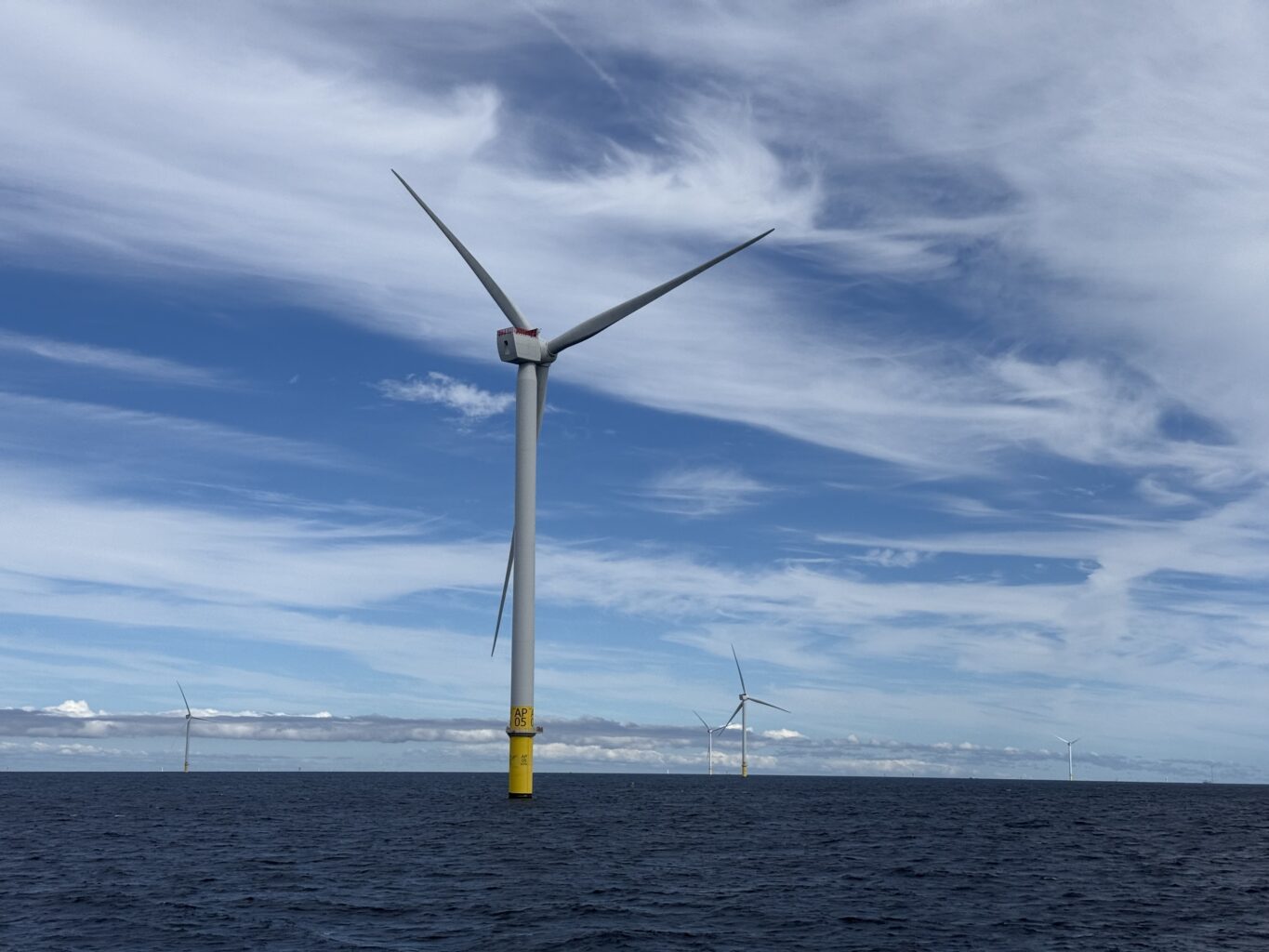
Long Island hit triple digits three times over the Fourth of July weekend. On the hottest day of the stretch, an offshore wind project 35 miles off Montauk produced power at a level that exceeded its own projections.
Context
Heat waves test the grid
Heat waves put a specific kind of strain on the power grid. The cushion between supply and demand narrows: rising demand for cooling forces air conditioners to draw more electricity, while the heat also causes some power plants to lose efficiency. New York’s grid operator, NYISO, felt that squeeze on July 2 and issued an Energy Watch alerting the public to declining reserves.
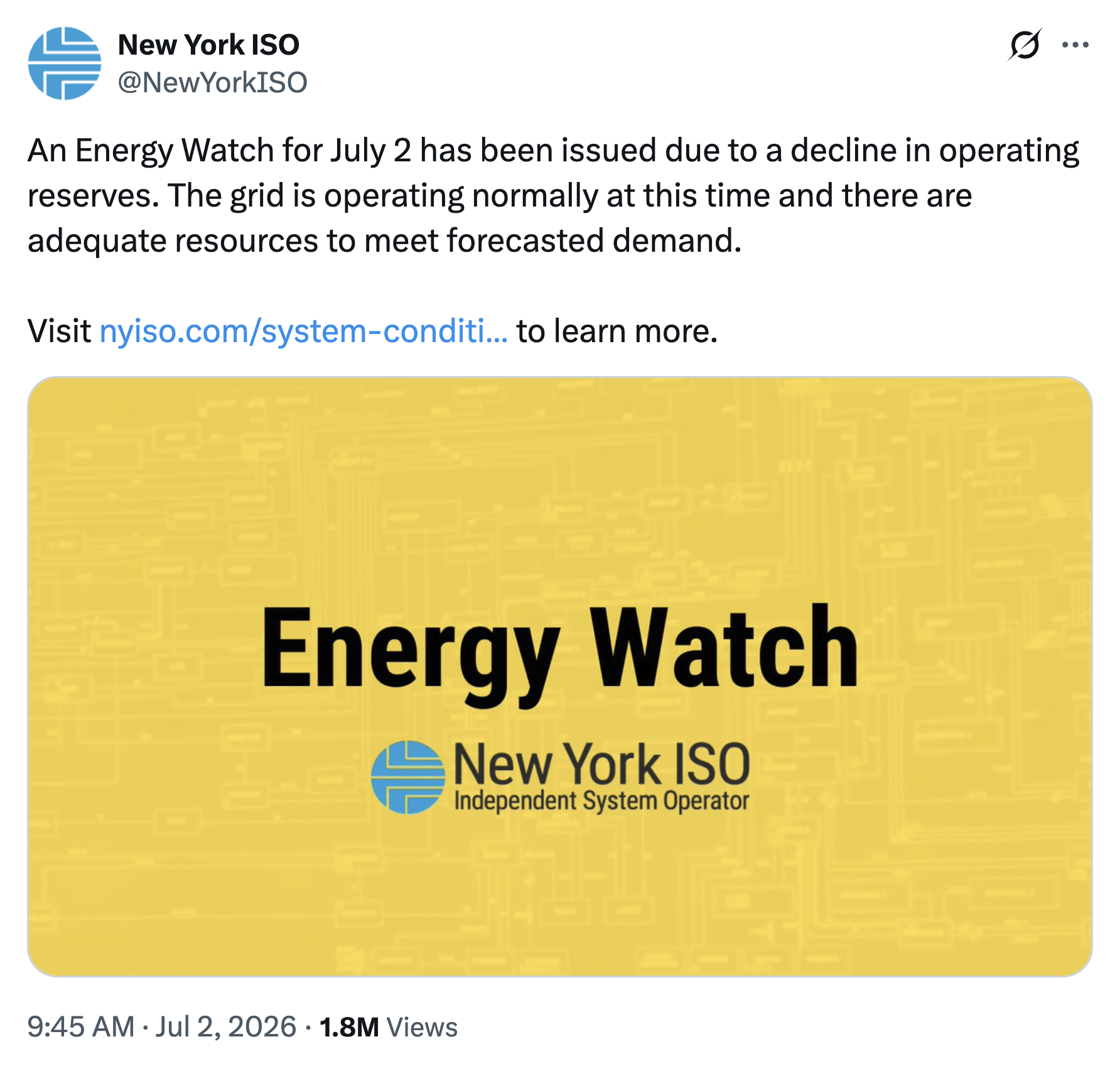
NYISO’s Energy Watch notice, issued July 2, 2026.
The grid held. But NYISO’s decision to put the public on notice shows how tight things got that afternoon and set up a real test of whether newer energy sources on Long Island could carry their share of the load.
The Performance
South Fork Wind ran well past its own target
South Fork Wind, the 132-megawatt offshore wind project serving eastern Long Island, answered that test. From July 1 through July 4, the twelve-turbine farm averaged a capacity factor of 74.7% and sent nearly 10 gigawatt-hours of power into the local grid. On July 2, the same day NYISO issued its watch, the capacity factor climbed to almost 90%.
Capacity factor is the number that makes this performance meaningful, because it measures how much of a plant’s maximum possible output it’s producing. It’s the standard way utilities and grid operators judge whether a power source is pulling its weight. When South Fork debuted as America’s first utility-scale offshore wind farm in 2024, the Long Island Power Authority and Ørsted projected it would run at roughly a 46.4% net capacity factor over a full year. The project matched that target almost exactly in its first twelve months, proving itself a valuable contributor right off the bat.
South Fork’s performance during this most recent heat wave wasn’t a one-time event. During a heat emergency in June 2025 — when “feels-like” temperatures soared as high as 110°F — South Fork delivered an 87.4% capacity factor in the peak evening window when New York’s grid needed it most, according to Ørsted’s performance reporting. For two consecutive summers, the project has achieved its strongest numbers at exactly the moments the grid was under the most pressure.
South Fork Wind’s output during the July heat wave
Projected annual capacity factor (LIPA & Ørsted)
Average capacity factor, July 1–4
Peak on July 2 — the same day NYISO issued its Energy Watch
Source: Ørsted, “Energy That Works: South Fork Wind” (2025); Ørsted LinkedIn post, July 2026; NYISO Energy Watch, July 2, 2026.
The Reaction
Not just a Long Island story
Ørsted’s Mikkel Mæhlisen wrote about the performance on LinkedIn, noting that South Fork Wind delivered reliable power “around the clock” through one of the hottest stretches of the summer while the country marked its 250th anniversary. NYSERDA’s Doreen Harris publicly touted the results in her own post. In a separate report on the project’s first full year, Ørsted confirmed that South Fork’s results were on par with its best-performing projects worldwide, pointing to remarkably strong offshore wind resources off the Northeast coast.
“During one of the hottest stretches of the summer so far, South Fork Wind delivered reliable power around the clock.”
— Mikkel Mæhlisen, Ørsted
Long Island wasn’t the only beneficiary of strong offshore wind performance during that heat wave. News reports found that offshore wind projects farther north, off Massachusetts and Rhode Island, also ran hard during the same stretch of heat, adding to this new resource’s track record of dependability when it counts.
Bottom Line
Offshore wind projects are exceeding expectations
A single heat wave doesn’t prove much on its own, but South Fork Wind’s track record does: a full year that landed almost exactly on its projected 46.4% capacity factor, a June 2025 heat emergency where it hit 87.4%, and now this critical July day at nearly 90% when the grid needed it most. Every time the numbers have moved, they’ve moved in the right direction. Offshore wind can deliver when it matters.