
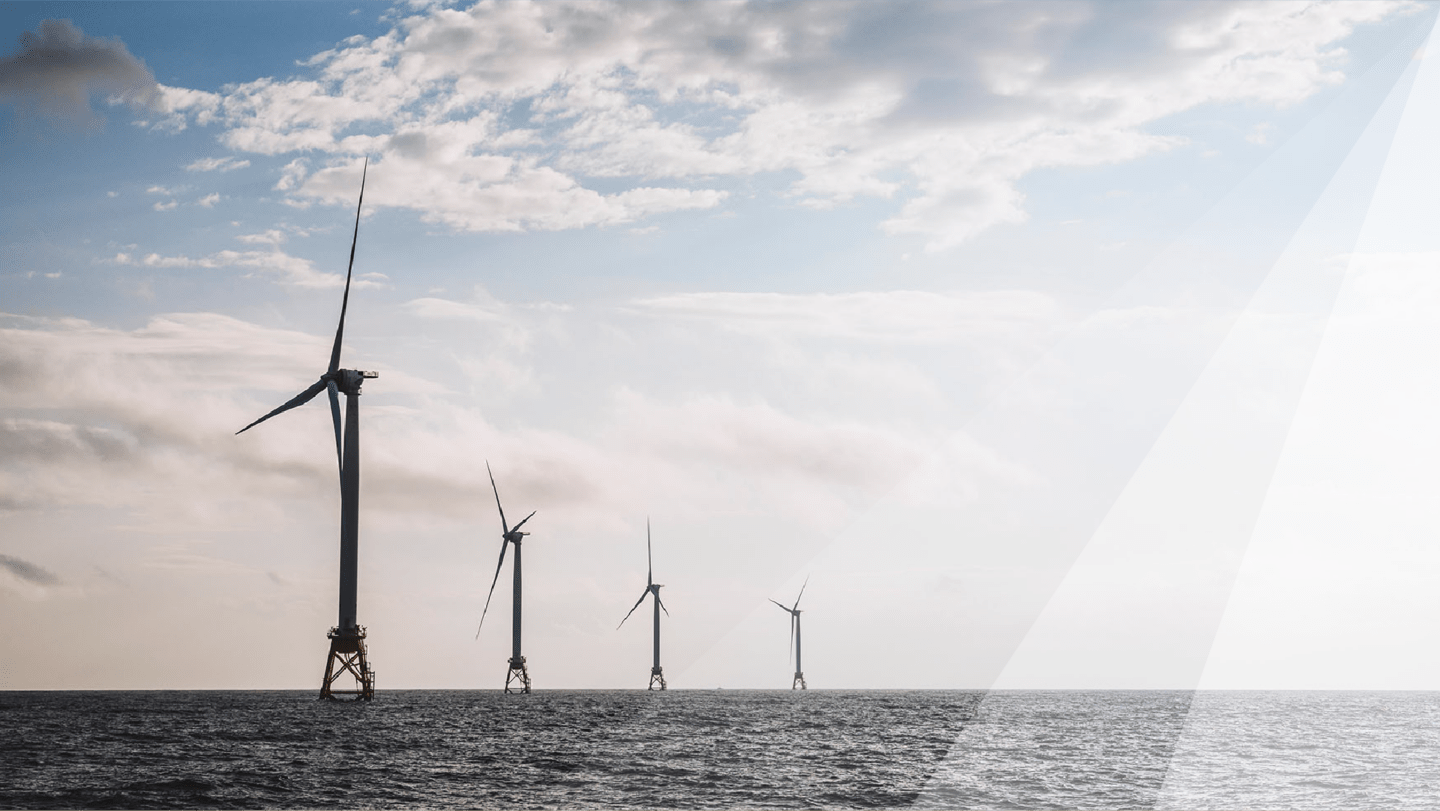
Most people picture offshore wind farms above the water: turbines turning, renewable power flowing to the grid. But below the surface, something just as important is taking shape, and it’s good news for fishing families and coastal economies.
Context
An empty lot becomes a neighborhood
Wind turbines are becoming artificial reefs, and research suggests they may be among the most fish-productive habitats on the planet.
Picture an empty lot. Not much lives there. Now picture someone building a multi-story apartment complex on that same site: suddenly there’s structure, shelter, nooks and crannies, places to raise a family. The neighborhood fills up, businesses open nearby, and life spreads outward for blocks. That’s close to what happens when an offshore wind turbine goes into the seafloor.
Before a turbine goes in, the ocean bottom around most wind farm sites is soft sand, the underwater equivalent of that empty lot: a relatively featureless habitat, sparse and quiet, with few places for marine life to attach, shelter, or feed. The moment the steel monopile is driven into the seabed, that changes. Within weeks, mussels, barnacles, and sea anemones start colonizing the structure. Within a year and a half, a turbine can be nearly 100% covered in marine life. That community then rains shells and nutrients down onto the seafloor, creating a ring of enriched habitat, known as the “halo effect,” that can extend up to 15 times the size of the turbine’s own footprint. Then the fish arrive.
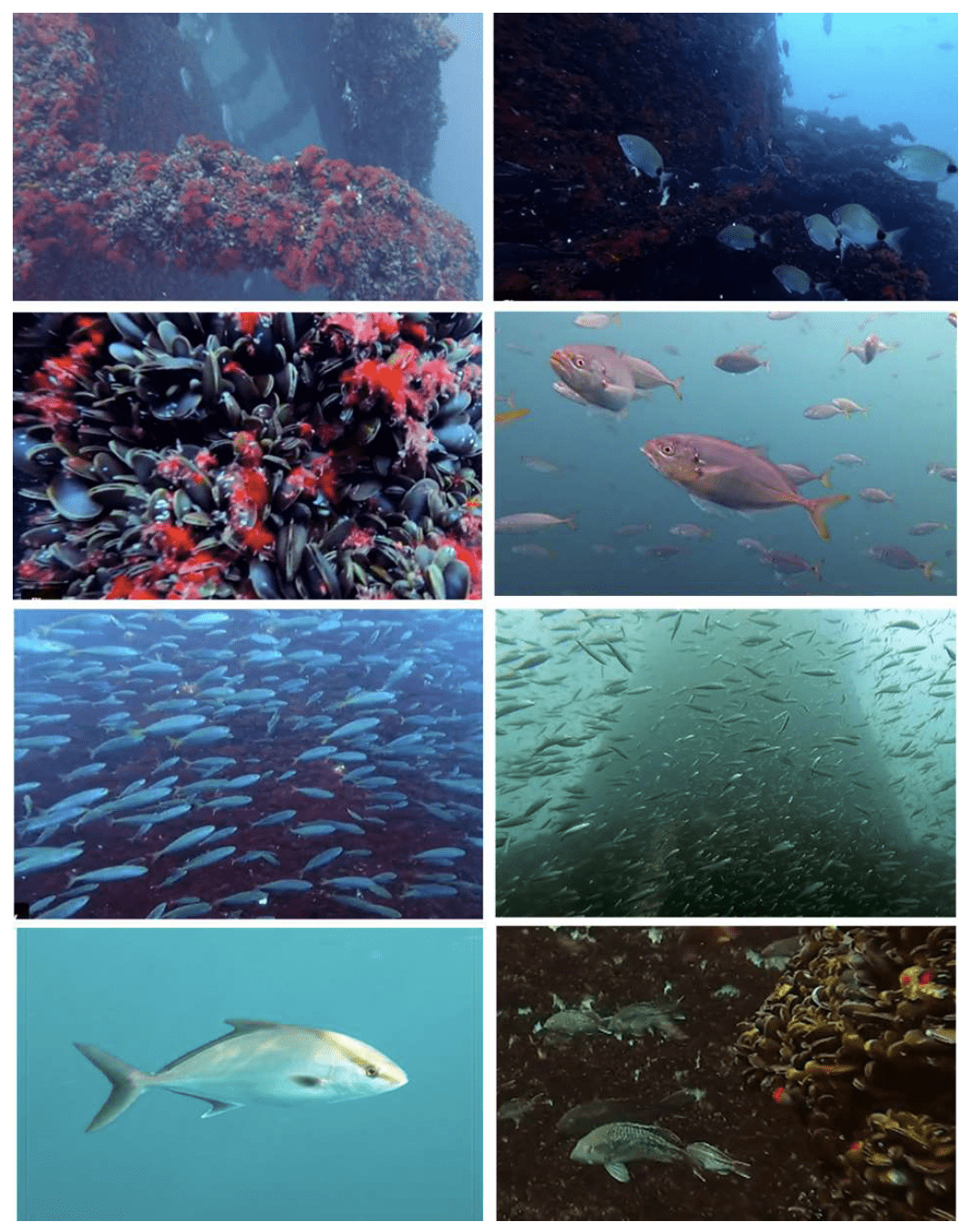
Source: Dominion Energy video, marine life on Virginia’s pilot turbines
The Research
The numbers are striking
Research on offshore oil and gas platforms, which create the same artificial reef effect, found that these structures produce more new fish biomass per square meter than any other marine habitat ever studied. More than coral reefs. More than kelp forests. Researchers measured fish production on offshore platforms at roughly 4 to 11 grams of new fish per square meter per year, compared to just 0.1 to 0.3 grams on a coral reef and less than 0.02 on a bare sandy bottom.
Early research suggests offshore wind turbines can generate many of those same positive effects.
This isn’t just fish being attracted to a new spot, though that happens too. The structures are actually generating new fish biomass: more fish being born, growing, and reproducing than would otherwise occur. Scientists call this “secondary production,” and offshore structures are off the charts as sources.
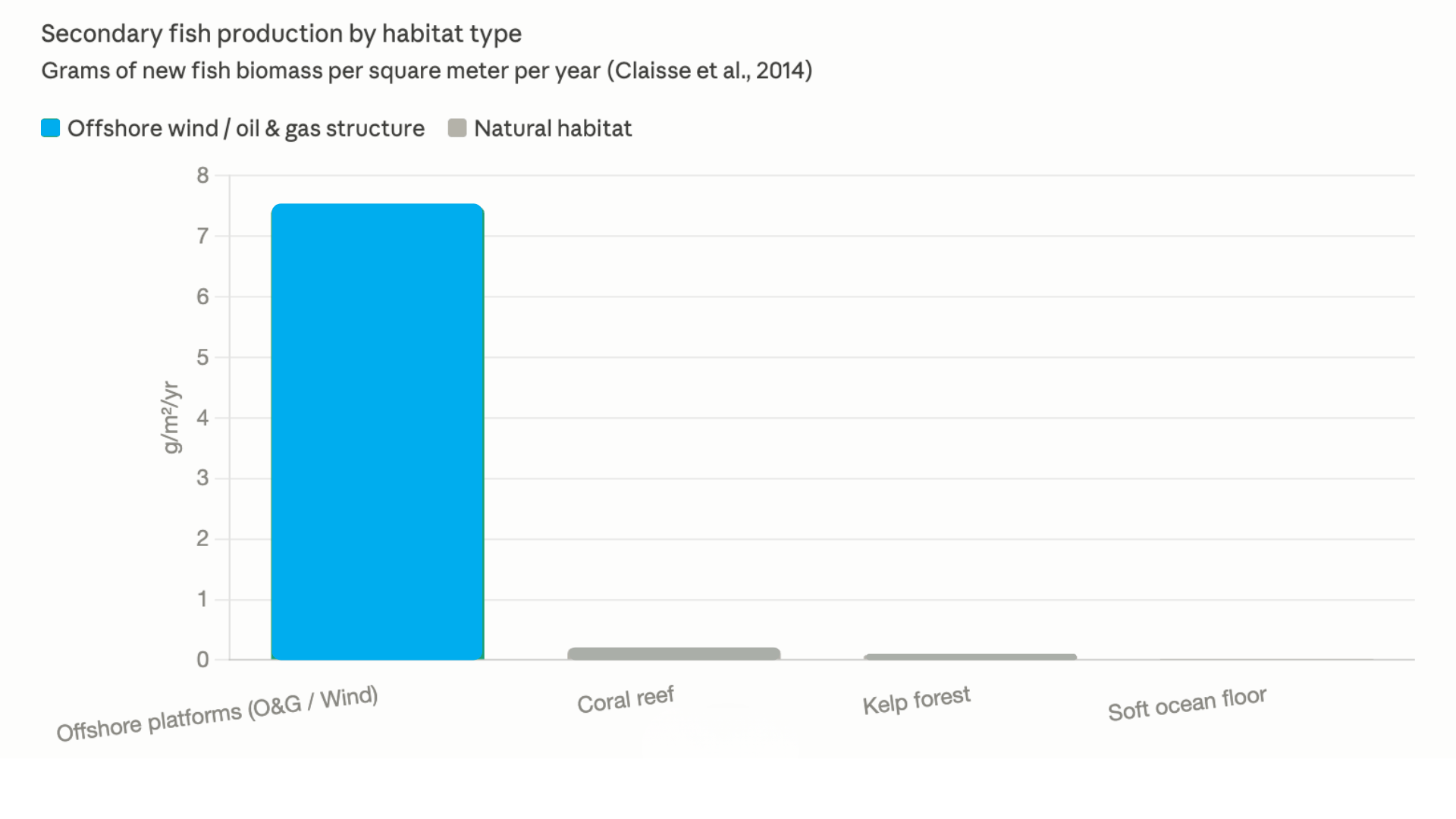
Source: Claisse et al., 2014, as cited in the NEBA Analytics / CEN study
The Evidence
It’s already happening in American waters
Anglers noticed the dynamic before scientists confirmed it. The Block Island Wind Farm off Rhode Island, the country’s first offshore wind project, attracted so many fish so quickly that its five turbines became a popular stop for charter boats and recreational anglers almost immediately after installation, part of the roughly $400-million-a-year recreational fishing industry in southern New England.

Charter boats and recreational anglers fishing near turbine structures
The same story unfolded off Virginia’s coast after two pilot turbines went in the water in 2020. Recreational fishermen and spearfishers began targeting the structures right away, with video footage revealing thriving marine communities growing on the monopiles. Projections for the full 176-turbine Coastal Virginia Offshore Wind project suggest recreational fishing value in the area could rise by 51% and commercial fishing value by 15% over the course of the project’s operation. For fishing communities, that’s a net gain, not a cost.
Projected change in fishing value at CVOW-C (Coastal Virginia Offshore Wind, 176 turbines)
Source: NEBA Analytics / CEN study, projections for Coastal Virginia Offshore Wind (176 turbines)
Bottom Line
A neighborhood that keeps growing
The turbines off Virginia will be in service for decades, and the steel structures themselves, protected from corrosion, could last far longer. The longer they stand, the more complex and productive the reef communities become. Scientists compare their long-term value to marine protected areas, where fish populations rebuild over time and spill over into surrounding waters, boosting catch for the boats fishing nearby.
Above the water, offshore wind turbines generate electricity. Below the surface, they can create a habitat that supports fish, anglers, and coastal economies. For many fishing communities, that makes offshore wind more than an energy project. Projects become part of the marine ecosystem themselves.
Read More
Full Study: NEBA Analytics / CEN